The Best Way to Monitor Remote Land and Property

Monitoring rural property presents a unique challenge. Many farms, hunting properties, cabins, and large tracts of land sit far beyond the reach of traditional internet connections. Without WiFi, most conventional security camera systems simply cannot function, leaving property owners with limited options.
Fortunately, modern cellular trail cameras offer a practical solution. Originally designed for wildlife observation, these cameras have become one of the most effective tools for monitoring remote property where internet access and power infrastructure may be limited.
Why Traditional Security Cameras Often Fail in Remote Areas
Most home security cameras rely on a stable WiFi connection to transmit images or video. While this works well in residential neighborhoods, it becomes a major limitation for rural properties.
Cabins tucked deep into wooded areas, farmland located miles from town, or equipment yards placed far from a primary residence rarely have reliable internet service. Running power lines or installing network infrastructure across large properties is expensive and often impractical.
Even when internet service is available, outdoor security cameras are typically not designed to operate for long periods in harsh environments. Weather exposure, wildlife interaction, and seasonal temperature swings can quickly impact performance.
Because of these limitations, many landowners look for an alternative that does not rely on a home network.
How Cellular Trail Cameras Solve the Problem
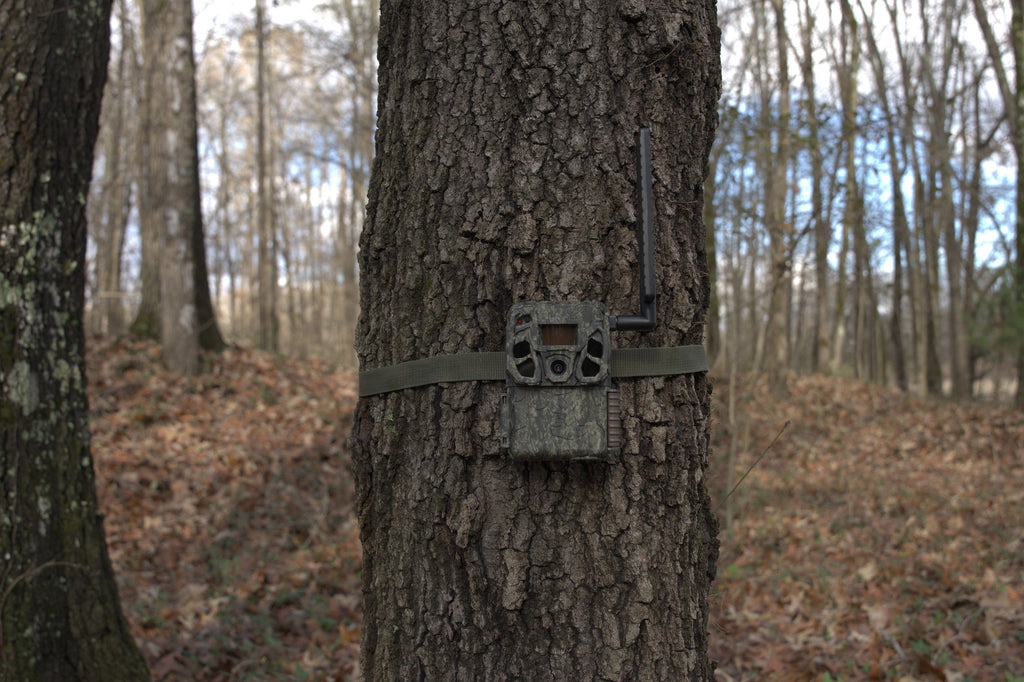
Cellular trail cameras are designed specifically for outdoor monitoring in remote locations. Instead of relying on WiFi, they use cellular networks to transmit images and video clips directly to a mobile app.
When motion is detected, the camera captures a photo or video and sends it through a cellular connection. Within moments, the image appears on your phone, allowing you to see exactly what triggered the camera.
This approach eliminates the need for internet infrastructure at the camera location. As long as there is cellular signal in the area, the camera can deliver updates from virtually anywhere.
Because trail cameras are built for outdoor use, they are also designed to operate through changing weather conditions, temperature swings, and long deployment periods.
Where Cellular Trail Cameras Are Commonly Used for Property Monitoring
Remote monitoring is valuable in many different situations. Property owners often place cameras in areas where activity is difficult to observe in person.
Common locations include:
• Driveways and property entrances
• Farm gates and access roads
• Barns, sheds, and equipment storage areas
• Remote cabins and hunting camps
• Livestock pastures and watering areas
• Trail systems and wooded property lines
In each of these scenarios, a motion-activated camera provides immediate awareness when something enters the area.
For landowners who cannot visit their property frequently, this type of monitoring provides valuable peace of mind.

Image: Craig Kavajecz
Why Motion Alerts Matter
One of the most useful features of a cellular trail camera is the ability to receive motion alerts in real time. Instead of checking a camera manually, you are notified the moment activity occurs.
This allows you to quickly verify what triggered the camera. Wildlife movement, a vehicle entering the driveway, or unexpected activity near equipment can all be confirmed within seconds.
Some advanced cameras even allow users to view live footage directly through the mobile app, adding another level of situational awareness when monitoring remote property.
A Simple and Effective Solution for Rural Monitoring
Monitoring land that sits miles away from your home does not have to require complex surveillance systems. Cellular trail cameras provide a straightforward and dependable way to keep watch over remote locations without relying on WiFi or wired infrastructure.
For landowners, hunters, and property managers, this technology makes it possible to stay connected to the places that matter most, no matter how far away they may be. By combining motion detection, cellular transmission, and rugged outdoor design, modern trail cameras offer one of the most practical solutions available for remote property monitoring.